
Pharmaceutical scientist perspective: Supplements can be powerful allies – but only when chosen wisely. Here’s what I’ve learned from 20+ years in drug development, working with cell and gene therapies, and reviewing hundreds of supplement studies.
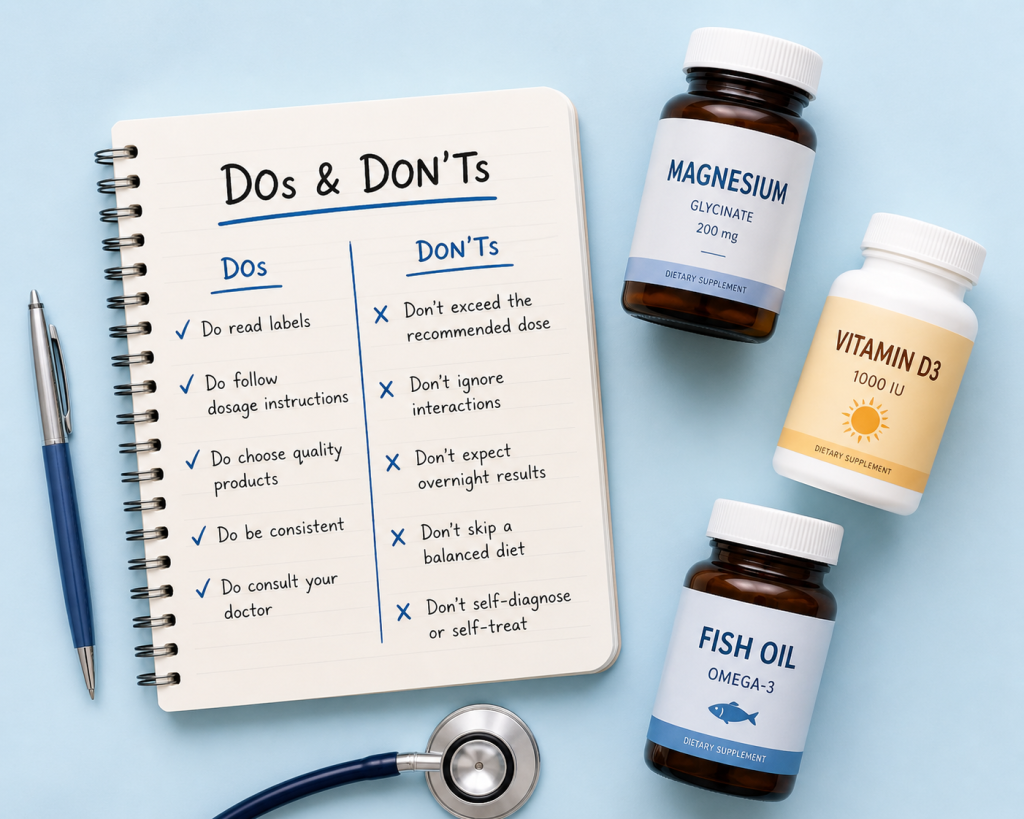
✅ DO: Start with blood testing, not guessing
Before buying any supplement, get a baseline. Common deficiencies (iron, vitamin D, B12, magnesium) are easy to test. Without data, you’re throwing money into a black hole.
Key labs to consider: vitamin D (25‑OH), ferritin, vitamin B12, folate, magnesium (RBC), zinc, and a complete blood count.
❌ DON’T: Take high doses of single nutrients without cofactors
For example: high‑dose vitamin D depletes magnesium; long‑term high‑dose zinc depletes copper. A “balanced” approach includes cofactors.
Good stacks: D3 + K2 + magnesium. Zinc + copper (8–15 mg Zn : 1–2 mg Cu).
✅ DO: Check for medication interactions
St. John’s Wort interferes with oral contraceptives and antidepressants. Vitamin K2 can theoretically affect warfarin. Always ask your pharmacist or doctor.
❌ DON’T: Buy products without third‑party testing
Look for USP, NSF, or ConsumerLab seals. These verify that what’s on the label is actually in the bottle – and that contaminants (heavy metals, microbes) are absent.
✅ DO: Start low, go slow
Introduce one supplement at a time, at a low dose, for at least 2‑3 weeks. Note any changes (positive or negative). Then add another. This way you identify what works and what doesn’t.
❌ DON’T: Ignore the form of the nutrient
Magnesium oxide is poorly absorbed (use glycinate, malate, or citrate). Vitamin D3 is more effective than D2. Methylcobalamin (B12) is better absorbed than cyanocobalamin for many people.
✅ DO: Cycle or reassess periodically
What worked last year may not be needed today. Retest blood levels every 6‑12 months. For hormones or adaptogens (ashwagandha, rhodiola), consider cycling 5 days on, 2 off, or 3 weeks on, 1 off.
❌ DON’T: Believe the “more is better” myth
Megadoses of vitamin C (over 2g/day) can cause digestive distress; high zinc (>50mg/day) can suppress immunity and cause copper deficiency. Stick to evidence‑based ranges.
✅ DO: Look for synergy
Vitamin C enhances iron absorption. Piperine (black pepper extract) boosts curcumin absorption. Fish oil plus vitamin E reduces oxidation. Smart combinations are more effective than isolated pills.
❌ DON’T: Trust marketing claims without references
See a “proprietary blend”? That’s often a red flag. If a brand doesn’t disclose exact amounts of each ingredient, consider a different brand.
🔬 Quick reference table
| Do this | Don’t do this |
|---|---|
| Test blood levels before supplementing | Guess and hope |
| Check for drug interactions | Assume everything is safe |
| Use third‑party tested brands | Buy cheapest generic online |
| Start with one supplement at a time | Take a “kitchen sink” stack |
| Choose bioavailable forms | Buy oxide or cheap synthetic forms |
📘 Final word
Building a supplement stack is like designing a clinical study: you need a hypothesis, baseline measurements, interventions one at a time, and outcome tracking. Do it right, and you may feel a genuine difference. Do it carelessly, and you’ll waste money – or worse, harm your health.
For a deeper understanding of how to evaluate supplement quality, read our full evaluation framework →
Disclaimer: This article is for educational purposes and does not replace professional medical advice. Always consult your healthcare provider before starting any new supplement, especially if you are pregnant, nursing, taking medications, or have a medical condition.