
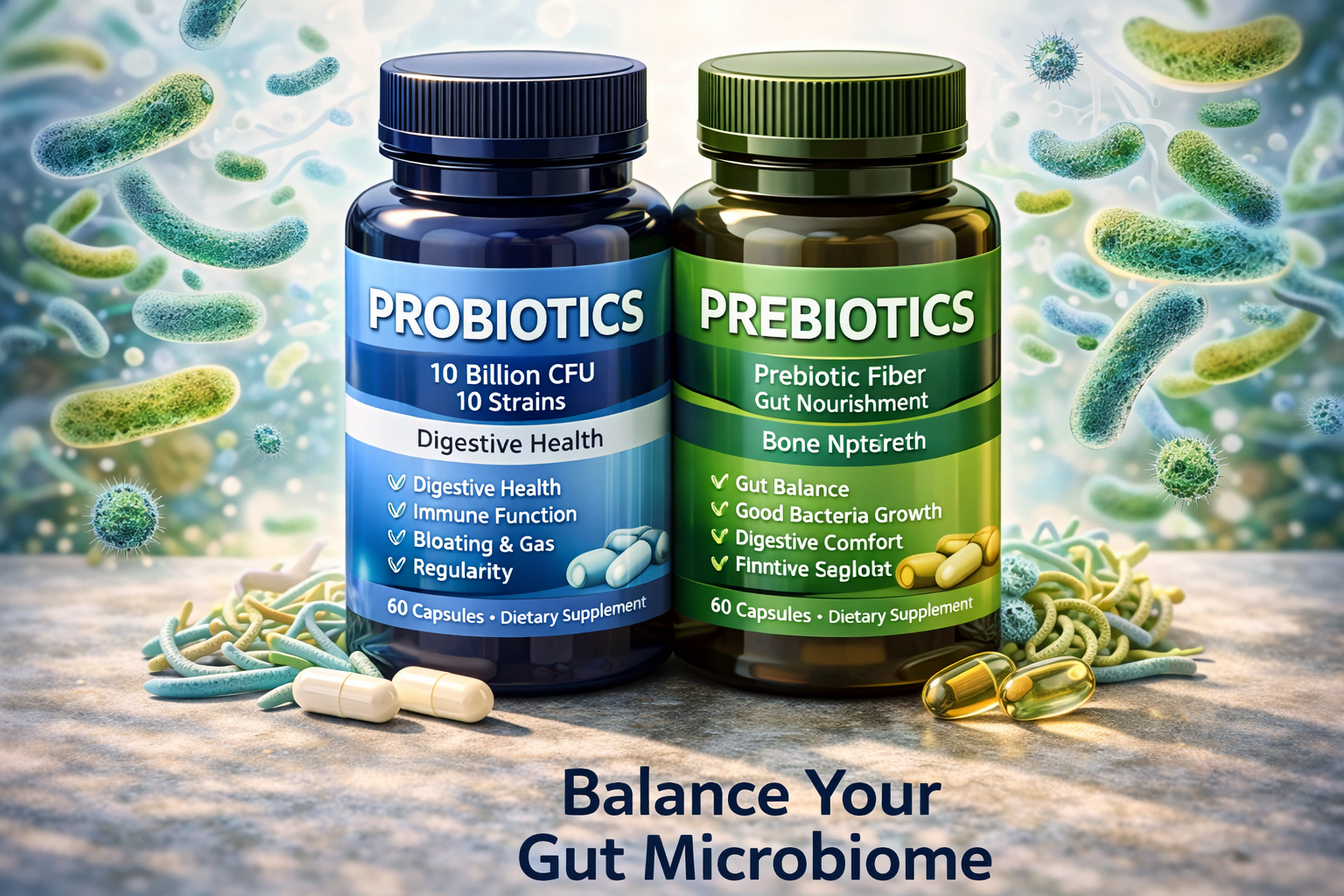
Probiotics and prebiotics are essential components for maintaining gut health, but they serve different functions. Probiotics are live bacteria and yeasts that help maintain a healthy gut, while prebiotics are types of fiber that feed these beneficial bacteria. Together, they support digestive health by promoting a balanced gut microbiome.
1. Introduction
In recent years, the term “probiotics” has moved from niche health circles to mainstream awareness. But what exactly are these microscopic allies, and why are they so important? Probiotics are defined as live microorganisms that, when administered in adequate amounts, confer a health benefit on the host. These beneficial bacteria (and sometimes yeasts) play a crucial role in maintaining the delicate balance of our gut microbiome – the vast community of trillions of microorganisms residing in our digestive tract.
The gut microbiome is far more than just a digestive aid; it’s a complex ecosystem influencing everything from nutrient absorption and vitamin synthesis to immune function and even mood regulation. Disruptions to this balance, often caused by factors like diet, stress, illness, or medication, can lead to various health issues. This is where probiotics come in. People commonly turn to probiotics for several reasons: to restore gut balance after antibiotic use, to alleviate digestive issues like irritable bowel syndrome (IBS), constipation, or diarrhea, and to support general wellness, particularly immune health.
2. Strains Matter: Specificity for Specific Goals
One of the most critical concepts in understanding probiotics is that not all probiotics are the same. Just as different dog breeds have distinct characteristics and purposes, different probiotic strains offer unique health benefits. It’s not enough to simply take “a probiotic”; for targeted results, you need the right strain for your specific health goal.
Probiotic strains are typically identified by their genus, species, and an alphanumeric designation (e.g., Lactobacillus rhamnosus GG). Here are some key genera and specific strains with their evidence-backed applications:
- Lactobacillus: A common genus found in fermented foods and the human gut.
- Lactobacillus rhamnosus GG (LGG): One of the most extensively studied strains. Research, including numerous meta-analyses and Cochrane reviews, strongly supports LGG’s efficacy in preventing and treating various forms of diarrhea, particularly antibiotic-associated diarrhea (AAD) and acute infectious diarrhea in children. It also shows promise in supporting immune function.For a well‑studied, evidence‑backed option, consider Culturelle Digestive Health, which contains the extensively researched strain Lactobacillus rhamnosus GG. Check price on Amazon
- Lactobacillus plantarum 299v (LP299v): Studies indicate this strain can help alleviate symptoms of Irritable Bowel Syndrome (IBS), such as abdominal pain and bloating, by modulating gut inflammation and improving gut barrier function.
- Lactobacillus rhamnosus GG (LGG): One of the most extensively studied strains. Research, including numerous meta-analyses and Cochrane reviews, strongly supports LGG’s efficacy in preventing and treating various forms of diarrhea, particularly antibiotic-associated diarrhea (AAD) and acute infectious diarrhea in children. It also shows promise in supporting immune function.For a well‑studied, evidence‑backed option, consider Culturelle Digestive Health, which contains the extensively researched strain Lactobacillus rhamnosus GG. Check price on Amazon
- Bifidobacterium: Another prominent genus naturally found in the human gut, especially in infants.
- Bifidobacterium longum (e.g., 35624, BB536): Certain strains of B. longum have demonstrated immune-modulating effects, potentially reducing the incidence of respiratory infections. B. longum 35624 (now Bifidobacterium longum subsp. longum 35624) has shown efficacy in improving IBS symptoms and reducing stress-related gut discomfort.
- Bifidobacterium animalis subsp. lactis BB-12: This strain is well-researched for its ability to improve bowel regularity and support immune health, particularly in reducing the incidence and duration of common colds.
- Saccharomyces boulardii (CNCM I-745): Uniquely, this is a beneficial yeast, not a bacterium.
- Saccharomyces boulardii CNCM I-745: This robust yeast is highly effective in preventing and treating various types of diarrhea, including traveler’s diarrhea, antibiotic-associated diarrhea (AAD), and recurrent Clostridioides difficile infection. It works by inhibiting pathogen growth, modulating immune responses, and restoring gut barrier function. Its yeast nature also makes it resistant to antibiotics, allowing it to be taken concurrently.
For antibiotic‑related digestive issues, Florastor (Saccharomyces boulardii) is a yeast‑based probiotic that works well alongside antibiotics. Shop Florastor →
- Saccharomyces boulardii CNCM I-745: This robust yeast is highly effective in preventing and treating various types of diarrhea, including traveler’s diarrhea, antibiotic-associated diarrhea (AAD), and recurrent Clostridioides difficile infection. It works by inhibiting pathogen growth, modulating immune responses, and restoring gut barrier function. Its yeast nature also makes it resistant to antibiotics, allowing it to be taken concurrently.
When choosing a probiotic, look for products that clearly list the specific strains, not just the genus and species. This level of detail is crucial for ensuring you’re getting the benefits supported by scientific research.
If you prefer a multi‑strain formula, NOW Probiotic‑10 offers a blend of ten species with guaranteed potency. View on Amazon →
3. CFU: Quantity and Viability
The potency of a probiotic is measured in Colony Forming Units (CFU), which indicates the number of live, active microorganisms in each dose.
- Typical Dosages: For general maintenance and digestive wellness, dosages often range from 1 to 10 billion CFU per day. For more therapeutic uses, such as addressing specific digestive issues or recovering from antibiotic use, dosages may be higher, typically between 10 and 50 billion CFU. Some specialized strains or conditions may warrant even higher doses, but always consult with a healthcare professional.
- Stability and Viability: The CFU count on the label is only meaningful if those organisms are alive and viable when you consume them. Probiotics are delicate and can be destroyed by heat, moisture, and stomach acid. High-quality manufacturers employ specific technologies (e.g., freeze-drying, enteric coatings, specialized packaging) to ensure the probiotics remain alive and potent until the expiration date. Always check the expiration date and follow storage instructions carefully.
- The Role of Prebiotics: To further enhance the effectiveness of probiotics, consider their synergistic partners: prebiotics. Prebiotics are non-digestible fibers that selectively stimulate the growth and activity of beneficial bacteria in the gut. Common prebiotics include inulin, fructooligosaccharides (FOS), and galactooligosaccharides (GOS), found naturally in foods like onions, garlic, bananas, and whole grains. When probiotics and prebiotics are combined in a supplement, they are called synbiotics, offering a powerful one-two punch for gut health.To further support your gut microbiome, consider adding a prebiotic supplement. Prebiotics are non‑digestible fibers that selectively feed beneficial bacteria. One high‑quality option is NOW Foods Inulin, a pure prebiotic fiber powder. Check price on Amazon →Alternatively, Jarrow Formulas Prebiotic provides fructooligosaccharides (FOS) to nourish probiotics. Shop Jarrow Prebiotic →
4. Quality Matters: How to Select a High-Quality Probiotic
Given the vast array of probiotic supplements available, discerning quality is paramount. Here are key criteria for making an informed choice:
- Third-Party Testing: Look for certifications from independent organizations that verify product purity, potency, and label accuracy. Reputable seals include:
- USP (U.S. Pharmacopeia)
- NSF International
- ConsumerLab.com These certifications provide assurance that the product contains what it claims, in the amounts specified, and is free from harmful contaminants.
- Strain Specificity: As discussed, the label should clearly list the full genus, species, and specific strain designation (e.g., Lactobacillus rhamnosus GG). Avoid products that only list generic “probiotic blend” or just the genus and species without the strain.
- Expiration Date: Ensure the product guarantees the stated CFU count until the expiration date, not just at the time of manufacture. This indicates the manufacturer’s confidence in the stability of their product.
- Storage Requirements: Pay attention to whether the probiotic requires refrigeration or is shelf-stable. Follow these instructions precisely to maintain viability. Shelf-stable probiotics are often formulated with advanced packaging to protect against environmental factors.
- Avoid Unnecessary Fillers: Opt for products with minimal ingredients. Avoid supplements containing artificial colors, flavors, sweeteners, or excessive fillers that offer no health benefit. If you have allergies, check for common allergens like dairy, soy, or gluten.
For those following a plant‑based diet, vegan‑friendly probiotics are available. Garden of Life Dr. Formulated Probiotics offers a comprehensive blend in a dairy‑free, vegan capsule. Shop vegan probiotic →
5. Safety & Precautions
Probiotics are generally considered safe for healthy individuals and are well-tolerated by most. However, certain populations should exercise caution and consult a healthcare professional before starting probiotic supplementation:
- Immunocompromised Individuals: People with weakened immune systems (e.g., those undergoing chemotherapy, organ transplant recipients, or individuals with HIV/AIDS) are at a slightly increased risk of infection from probiotic bacteria or yeasts.
- Critically Ill Patients: Individuals in intensive care units or those with severe underlying medical conditions should avoid probiotics unless specifically advised by their medical team.
- Patients with Central Venous Catheters: There is a rare but serious risk of probiotic bacteria or yeast entering the bloodstream and causing infection (bacteremia or fungemia) in individuals with central lines.
- Drug Interactions:
- Antibiotics: Since antibiotics are designed to kill bacteria, they can also destroy beneficial probiotic bacteria. To maximize probiotic effectiveness, take your probiotic supplement 2-3 hours apart from your antibiotic dose. Saccharomyces boulardii, being a yeast, is naturally resistant to antibiotics and can be taken concurrently.
- Immunosuppressants: If you are taking medications that suppress the immune system, consult your doctor before taking probiotics, as there could be theoretical interactions.
- Potential Side Effects: When first starting probiotics, some individuals may experience mild digestive upset, such as gas, bloating, or temporary changes in bowel habits. This is usually transient as your gut adjusts. To minimize these effects, it’s advisable to start with a lower dose and gradually increase it over a few days or weeks. If symptoms persist or worsen, discontinue use and consult a healthcare professional.
6. Conclusion
Probiotics offer a promising avenue for supporting gut health and overall well-being, but their effectiveness hinges on informed choices. The key takeaways are clear:
- Choose specific strains for specific goals: Research the evidence behind different strains to match them to your health needs.
- Verify CFU and third-party testing: Ensure you’re getting a potent, pure, and accurately labeled product.
- Consider prebiotics: These dietary fibers can nourish your beneficial gut bacteria, creating a more robust and resilient microbiome.
Remember that probiotics are just one piece of the puzzle for optimal health. A balanced diet rich in fiber, adequate hydration, regular exercise, and stress management are all foundational. For further exploration of holistic health, consider learning more about the roles of essential nutrients like Vitamin D and Omega-3 fatty acids.
Ultimately, while probiotics are generally safe and beneficial, your unique health profile and circumstances matter. For personalized advice on probiotic supplementation and comprehensive health strategies, always consult a healthcare professional. They can help you navigate the science and make the best choices for your individual needs.
1 thought on “The Science of Probiotics: Strains, Evidence, and How to Choose”